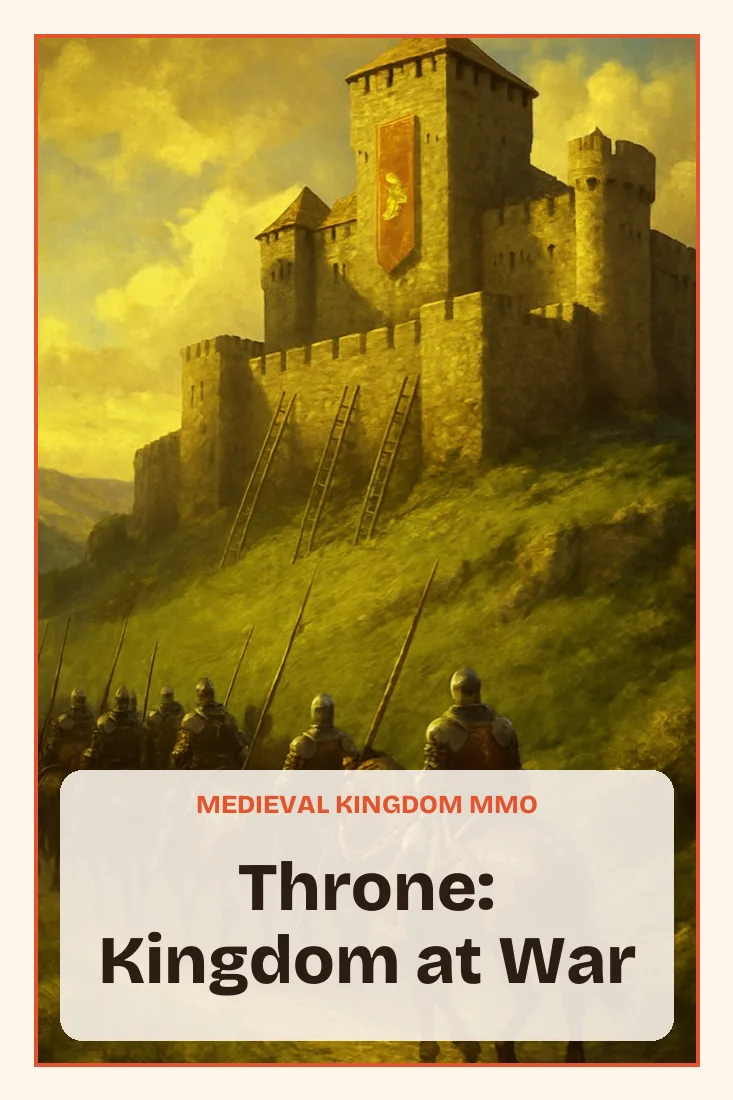
Throne: Kingdom at War opens with a flattering premise. You are a Lord, a descendant of the great King, considered worthy of ruling the Kingdom, and your town is your home. Plarium leans into that line about homeland: warriors who defend their own ground are the most dangerous kind. It sets the tone for a game that cares about identity, from the look of your town to the armour on your Hero.
Plarium offers the game through a web client, with an optional Plarium Play launcher and mobile apps, and we split our month between the browser and a phone. The core is familiar for the genre: production buildings, troop training, marches against rival Lords and an alliance-style Order. What sets it apart is the Hero, who gives every campaign a recognizable face and a reason to gather resources beyond the next upgrade.
Farms, mills and the Academy’s long nights
The economy runs through Farms, Lumber Mills, Mines, Stone Quarries and Houses, and the official description is plain about how it improves: learning new technologies makes those buildings more efficient. The Academy is where that learning happens, with scholars conducting Studies day and night for the good of your town. It is a tidy loop and a good one for players who like to see steady, visible progress.
In practice the opening fortnight is comfortable. Production is easy to understand, Studies are clearly signposted, and quests and errands give you short-term goals. The economy is less intricate than Imperia Online’s, which keeps the learning curve gentle, but there is enough to plan that a careful player pulls noticeably ahead of a careless one by week three.
Six troop classes and the march to battle
Plarium lists the troop classes as knights, spearmen, ranged, cavalry, siege and scouts, and each has a clear role. Scouts tell you what you are facing, siege units deal with fortifications, and the rest form the body of an army whose balance decides the outcome. Building a mix that answers what your scouts report is the core skill of the game.
The game promises dynamic real-time battles with players from around the world, and the marches do carry a sense of weight. Sending an army out, watching it travel and waiting for the report is the familiar rhythm of the genre, and Throne dresses it in the most polished presentation of the six games we reviewed. If you want a castle war that looks the part, this is the one.
Armour, weapons and the Hero’s workshop
The Hero is the feature that makes Throne distinctive. You equip your Hero and prepare them for new trials, and much of that gear is crafted from resources you gather rather than handed out. That turns ordinary production into something more personal: every load of stone and ore is potentially a better breastplate or blade for the character who leads your armies.
Crafting gives the mid-game a long-term project that sits alongside building and training, and it is satisfying to watch a Hero grow from plainly equipped to properly armoured. Our only reservation is that the gear chase can start to dominate your priorities, pulling resources away from the town. Keep a balance, and the Hero becomes the pride of the realm rather than its bottleneck.
Orders and the contest for the throne
Orders are Throne’s alliances, and the game’s advice is simple: join one of the powerful Orders or create your own and find loyal allies. In our month the Order was where the real game happened, organizing joint campaigns against rival Lords and timed sieges that decide who holds the throne. Those sieges are the high point of the calendar and the reason serious players plan their weeks around Order announcements.
Plarium tags the game as war, multiplayer, strategy and PvP, and the Order layer is what makes those labels real. A solo Lord can build a fine town, but without an Order the throne contests pass you by. It is also the place where free players feel the most pressure, because coordinated Orders that invest heavily move faster, which is reflected in our fairness score.
Laying foundations in Throne: Kingdom at War
- Upgrade Farms, Lumber Mills, Mines and Stone Quarries evenly before chasing a single favourite building.
- Start Academy Studies on day one and keep the queue running at all times.
- Train scouts early and use them before every attack to choose the right troop mix.
- Gather toward one piece of Hero gear at a time rather than spreading resources across several.
- Apply to an active Order by the end of the week and ask when its next siege is planned.
What wore on us
- Gear crafting can crowd out town development if you are not careful.
- Heavily invested Orders set a pace that free players struggle to match.
- Economy depth is lighter than in the more traditional realms on our list.
What kept us logging in
- The Hero and crafted gear give each campaign a personal focus.
- Six clear troop classes make army composition easy to learn and worth mastering.
- The most polished presentation of any realm we reviewed.
- Order sieges for the throne are genuine events that rally a whole community.
The ruler who will thrive in Throne: Kingdom at War
Players who want a character to invest in, enjoy guild-style Orders with a clear seasonal goal, and appreciate a polished, cinematic presentation. Those who want the deepest economy or prefer solo play will find better homes elsewhere on this page.
Where Throne: Kingdom at War stands after a month
Throne: Kingdom at War is the realm with the most personality on the battlefield. A Hero you equip yourself, six troop classes that reward scouting and Order sieges for the throne give it real drama, and the presentation is the best here. Its fairness to free players and the depth of its economy trail the leaders, which places it fifth, but it is the one to choose if you want a champion to ride out.