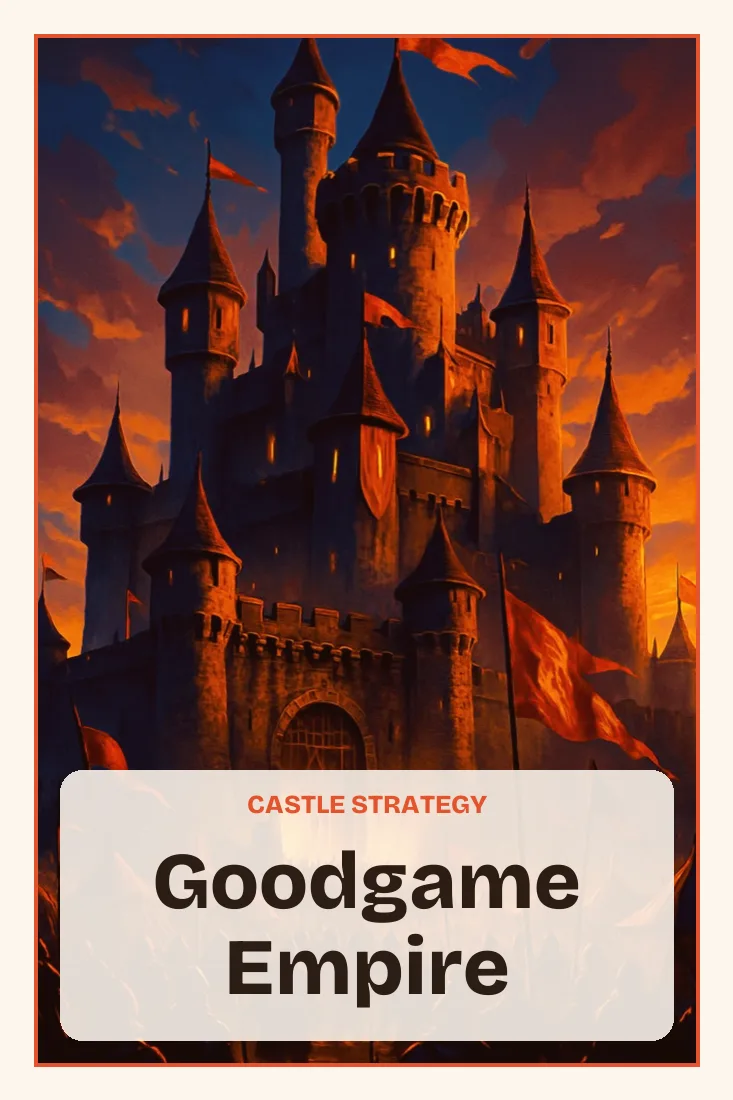
Goodgame Empire begins with a modest clearing and a promise from the game’s own description: turn an insignificant spot on the world map into a mighty kingdom. What surprised us, a month in, is how seriously it keeps that promise. The castle never stops growing. There is always another building to raise, another level to reach, another wall section to thicken, and the game is happy to let you take your time over it.
Goodgame Studios, based in Hamburg, launched the browser game in 2011 and later built the mobile game Empire: Four Kingdoms on the same idea. We played mostly in a desktop browser, with the app for daytime check-ins. The result is the most rounded realm we reviewed: not the deepest economy, not the harshest war, but the one that most completely delivers on the fantasy of ruling a castle that matters to the people around you.
Walls first, then everything else
The opening hours are a lesson in priorities. Food, wood and stone come from your own production buildings, and every upgrade competes for the same three piles. The tutorial nudges you through housing, storage and the first defensive works, and it is right to: storage caps decide how much you can save between sessions, and walls decide how much of it survives. By the end of week one our keep had a sensible ring of defences and a production line that could carry an overnight build.
After that, the publisher’s figure of over 60 different buildings starts to feel real. Military workshops, decorative pieces and specialist structures appear as you level up, and decorations are more than vanity: a well-dressed castle is part of the game’s identity, and the community notices. It is the only game here where we caught ourselves rearranging a courtyard just because it looked better.
Commanders, gear and a roster with real range
Goodgame lists more than 50 military units, and the variety shows up in practice. Ranged and melee troops matter differently against walls, gates and moats, and planning an attack means reading the target’s defences before you commit. Commanders lead your armies and can be equipped with weapons and armour, so a good attack is half troops and half the right leader with the right kit.
The battle screen asks you to split forces across the flanks and front of an enemy castle, which gives even a small raid a satisfying tactical step. It is not a wargame in the strict sense, and results are calculated rather than played out, but the decisions before the march are meaningful. Losing a commander’s worth of troops because you skipped scouting is a lesson you only need once.
Three more kingdoms beyond the first
The Great Empire is where everyone starts, and for a while it is enough. Then the map opens: the Everwinter Glacier, the Burning Sands and the Fire Peaks each have their own climate and their own resource, with coal, oil and glass joining the economy. Setting up a presence in each is a mid-game project that changes how you think about the whole account, because your kingdoms start feeding each other.
Players can also hold outposts in the Great Empire, which spreads your production and gives you more of the map to worry about. This is where Goodgame Empire earns its depth score. A single castle is a city-builder; four kingdoms and a handful of outposts are a logistics problem, and the game trusts you to solve it at your own pace rather than forcing a deadline.
Alliances, pacts and a calendar that never empties
Goodgame describes its alliance and pact system as unique to Empire, and the pact layer is the part we liked most. Alliances can formalize relationships with each other, so diplomacy has a shape beyond chat promises. Inside an alliance, the chat is convenient and busy, and a good leadership team uses it to schedule joint defence and big pushes. Ours had members from the Maritimes to Vancouver, which kept somebody awake for nearly every raid.
The other constant is events. The studio promises regular in-game events and weekly updates, and in our month there was always a reason to log in beyond routine upkeep. That is a strength and a pressure. Events reward the players who show up, and if you dislike feeling scheduled, the calendar can start to feel like a second job. Treat them as optional and the game remains pleasant.
Laying foundations in Goodgame Empire
- Follow the tutorial’s housing and storage builds closely; storage caps decide how much your keep can bank overnight.
- Put early stone into walls and a gate before troops, so the first curious neighbour finds nothing worth taking.
- Join an alliance with an active chat by day three, and ask how it handles defence while members are asleep.
- Run a small raid on a computer-controlled target to learn flank assignment before you try another player.
- Queue your longest upgrade last thing at night, then let the castle work while you are away.
What wore on us
- The event calendar can feel like homework if you only want to build quietly.
- Battles are calculated, not played, so the tactics end once the march leaves.
- Interface density grows fast; menus pile up once several kingdoms are running.
What kept us logging in
- The castle keeps growing for months, with over 60 buildings to raise and upgrade.
- Four kingdoms with different resources turn a city-builder into a real logistics game.
- Alliance pacts give diplomacy structure instead of leaving it to chat promises.
- Commanders with equipment make each attack feel planned, not just a pile of troops.
The ruler who will thrive in Goodgame Empire
Builders who want a castle to fuss over, players who enjoy a sociable alliance with plenty of chat, and anyone who likes having a reason to log in each day. Less suited to those who want pure wargaming or a quiet, uneventful economy.
Where Goodgame Empire stands after a month
Goodgame Empire is our first pick because it delivers the whole fantasy: a castle you grow for months, armies you plan carefully, alliances with real diplomatic tools and three more kingdoms waiting once the first feels settled. Its busy calendar will not suit every temperament, and the battles end at the planning stage. Still, no other realm on our shelf gave us so many good reasons to come back the next morning.